Decentralised greywater treatment
Turning waste water into a resource
Modular Nature based greywatertreatment and reuse solutions for homes institutions and communities
- Nature-based
- Modular
- Low-maintenance
- Decentralized
From greywater to reusable water, in 5 stages
Greywater is not waste. It is a resource.
Using freshwater for applications that do not require potable-quality water increases unnecessary demand on freshwater resources.
Plus the cost of unnecessary freshwater consumption for uses that never needed drinking-quality water in the first place.
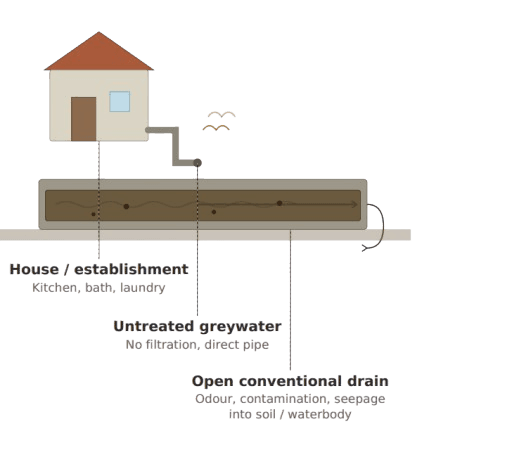
Untreated greywater flowing to a conventional drain
The SOAK NEXT solution
Meet the SOAK NEXT Modular Wetland System
A decentralized greywater treatment system based on Modular Vertical Flow Constructed Wetland (MVFCW) technology — engineered to work with natural biological processes rather than against them.
Primary settling
Greywater enters a settling chamber where heavier solids separate out before the water moves on for biological treatment.
Modular wetland treatment
Water passes vertically through layered media inside the Modular Vertical Flow Constructed Wetland — the core of the system.
Natural microbial action
Naturally occurring microbial communities within the media break down organic matter as part of the treatment process.
Polishing zone
A final polishing stage refines water quality further before it leaves the system.
Reuse
Treated greywater becomes available for suitable non-potable applications, such as landscape irrigation.
How it works
One continuous journey, from drain to reuse
Primary settling
Particles slow down and settle as heavier solids separate from the flow.
Wetland
Water passes vertically through layered media inside the modular units.
Microbial treatment
Naturally occurring microbial activity within the media supports treatment.
Polishing
Water visually clears as it moves through the final treatment stage.
Reuse
Treated water can be directed toward appropriate non-potable reuse applications, subject to water quality and intended end use.
Treated water is suited to appropriate non-potable reuse. SOAK NEXT does not position this system as producing drinking water.
Why SOAK NEXT
Engineering that works with nature, not against it
Nature-based
Works with natural physical, biological and microbial treatment processes.
Modular
System capacity and configuration can adapt to site requirements.
Low energy requirement
Designed to operate without continuous electrical energy for the treatment process.
Low maintenance
No complex moving mechanical components are required in the treatment modules.
Water reuse
Creates an opportunity to recover treated greywater for suitable non-potable applications.
Decentralized
Treatment can happen close to where the wastewater is generated.
Who we serve
Built for the places greywater already flows
Residential
A single home routing bathroom and laundry water into a compact modular unit.
Technology
Built on nature. Designed with engineering.
The Modular Vertical Flow Constructed Wetland (MVFCW) combines physical, biological and ecological processes into a single engineered system.
- Physical filtration
- Biological treatment
- Microbial activity
- Plant-based ecological processes
Simplified cross-section — actual module dimensions vary by site design.
Capacity
Designed around your water flow
Systems are designed according to site-specific greywater generation and treatment requirements.
Larger systems can be designed as site-specific / custom configurations.
Projects
Systems at work
Photography for projects beyond ZP School is being documented and will appear here as it becomes available.
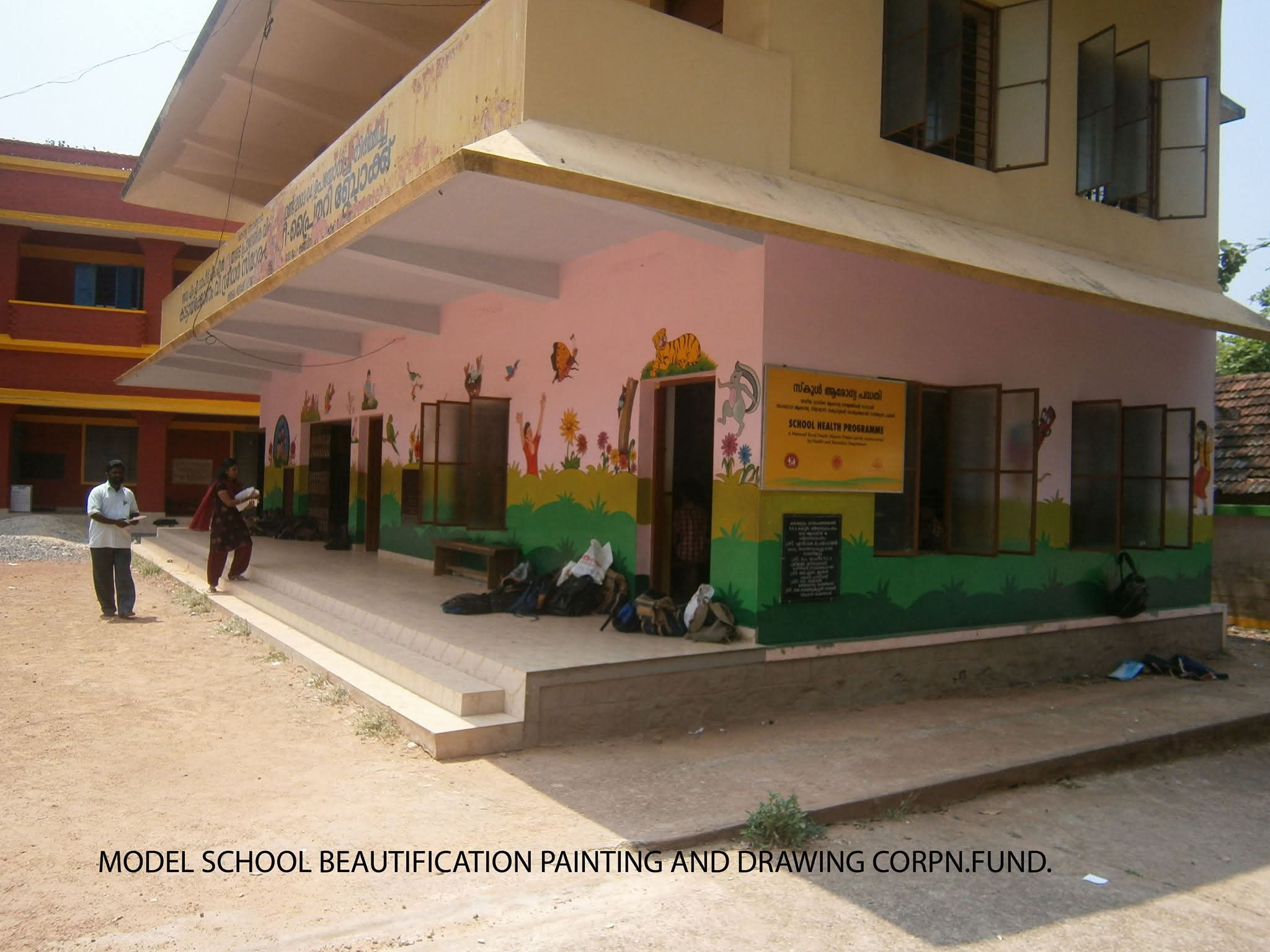 Planned
Govt ups kattaykonam
A planned 2,000 LPD system for the school, treating greywater from the hand-wash area.
- Location
- Trivandrum kerala
- Client type
- Educational institution
- Capacity
- 2,000 LPD
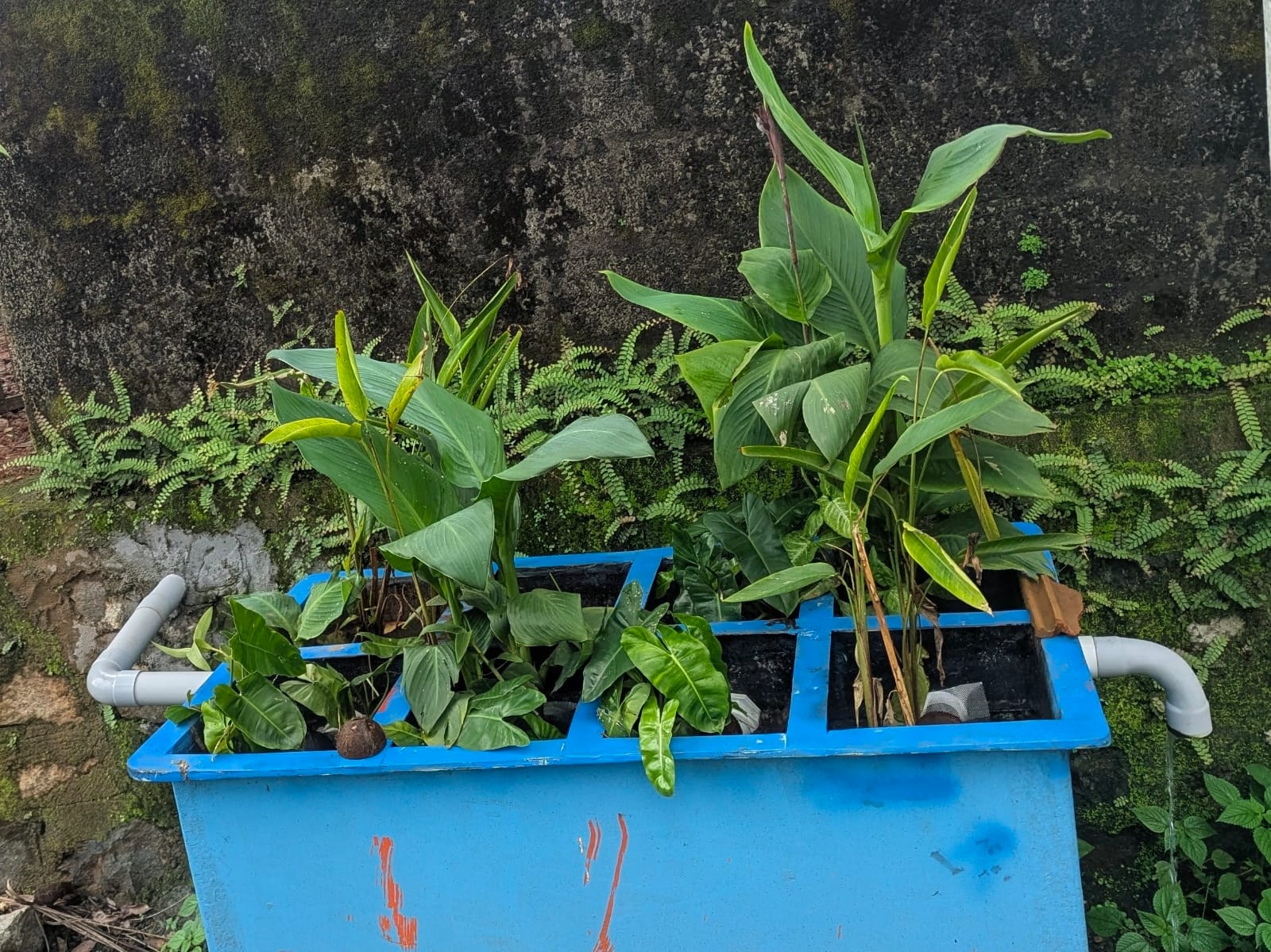 Operational
Home System
A completed 1,000 LPD system for home gardening.
- Location
- Kollam kerala
- Client type
- Home
- Capacity
- 1,000 LPD
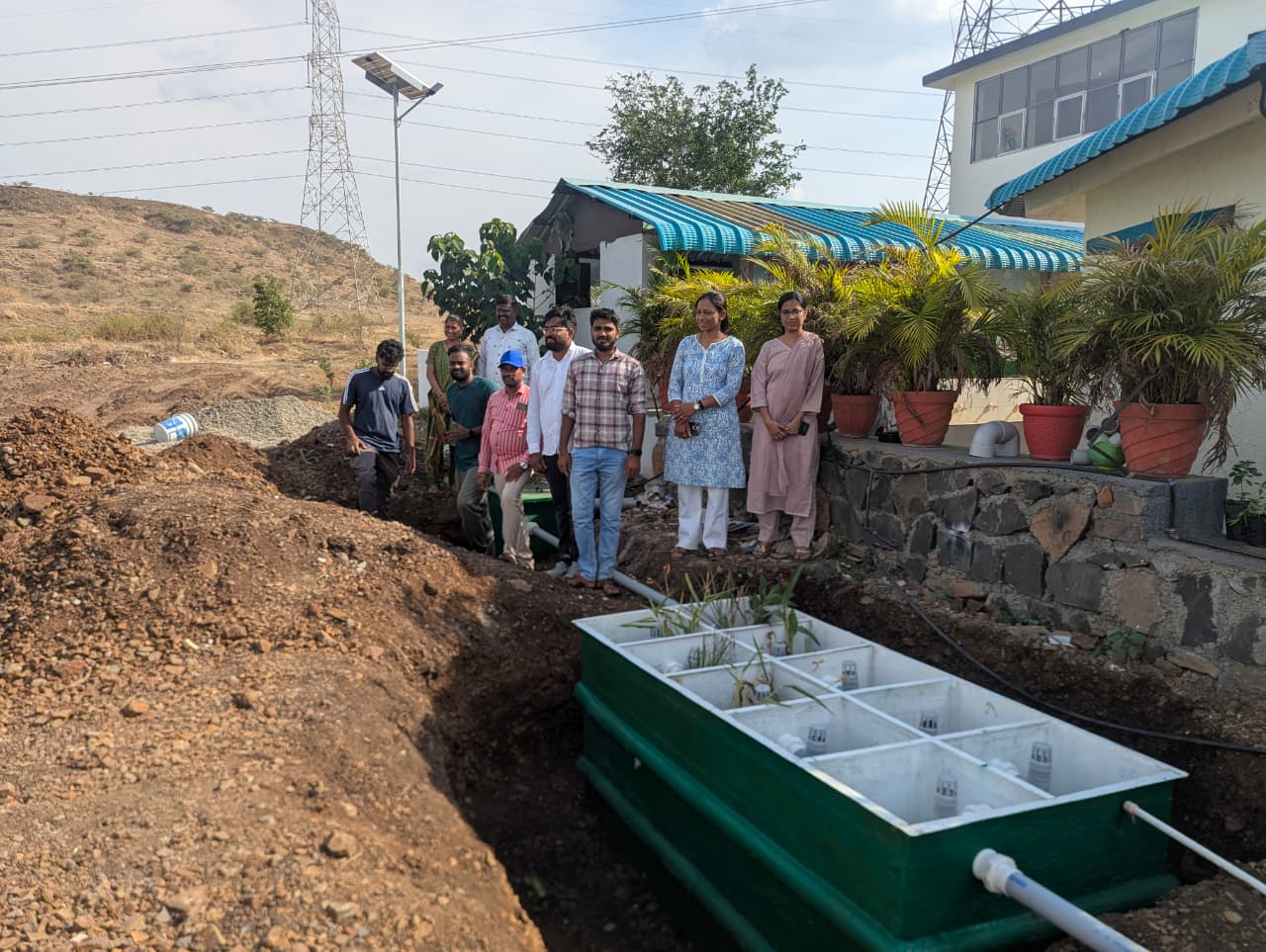 Installed
Zila Parishad School, Maharashtra
2500lpd system treating grey water from the toilet block of zilla parishad school jalindernagar maharashtra
- Location
- Jalindernagar, Maharashtra
- Client type
- Educational institution
- Capacity
- 2,500 LPD
Marked placeholders will be replaced with real site photography as it's captured.
Implementation
From first visit to running system
Site assessment
Understanding water usage, space, and site conditions.
System design
Sizing and configuring the treatment system to the site.
Fabrication
Modules built to the finalized design specification.
Installation
System installed and connected on site.
Commissioning
System brought online and checked for correct operation.
Monitoring & maintenance
Ongoing checks to keep the system performing well.
Impact
Small systems. Meaningful impact.
Water conservation
Reduces freshwater drawn for uses that don't need it.
Environmental protection
Keeps untreated greywater out of local drains and soil.
Resource recovery
Turns a waste stream into water available for reuse.
Decentralized infrastructure
Treatment sited where the water is actually generated.
Nature-based treatment
Relies on biological and ecological processes over chemicals.
Maintenance
Designed for practical operation
Routine maintenance is straightforward, with no complex moving parts in the treatment modules themselves.
Settling chamber desludging is typically every 6–12 months, depending on actual solids loading at the site.
- Inspection of treatment units
- Checking flow distribution
- Monitoring vegetation and media condition
- Cleaning accessible components
- Periodic desludging of the settling chamber
About SOAK NEXT
Building the next generation of decentralized water management
Vision
A future where wastewater is treated as a resource, not a burden.
Mission
To make decentralized, sustainable water treatment accessible through modular technology, ecological processes and practical engineering.
FAQ
Questions, answered
Have a greywater problem?
Let's turn your wastewater into a resource.
Tell us about your building, water usage and site.
Contact
Request a consultation
Tell us about your building, water usage and site — we'll get back to you to scope out a system.
- Kerala, India
- greywatermatters25@gmail.com
- +91 79024 29209